Book Review: "
Jacques & Hay 19th Century Toronto Furniture Makers" by Ruth Cathcart
Jacques & Hay is a name that pops up frequently in the Victorian-era furniture world within Canada. It reminds me of how the Jelliff, Belter, and Herter names always pop up here in the U.S. When attributing furniture we find here in America, the tendency is often to assume the piece was also made here - almost without a second thought. Occasionally, European origin comes to mind as a possibility, but most of the time people will default to American cabinetmakers for attribution because that is what we know.
It's curious, though, that pieces by Jacques & Hay are not more commonly visible in the U.S. Their factory and showrooms would have been 100 miles from Buffalo, NY and at one time they were the largest furniture manufacturer in the whole of Canada. Aside from their more mainstream lines of furniture, they made furniture for prominent citizens, hotels and other commercial buildings. In 1860 they were commissioned to make furniture for the use of the Prince of Wales during his visit to North America. Bedroom sets were made specifically for him in each of the Canadian cities he was to visit: Montreal (curled Maple), Ottawa (Oak), Niagara Falls (Cherry), and Toronto (Walnut).
There were two major fires in their factories that had them starting over from scratch: 1854 and 1856, but each time they bounced back stronger than before.
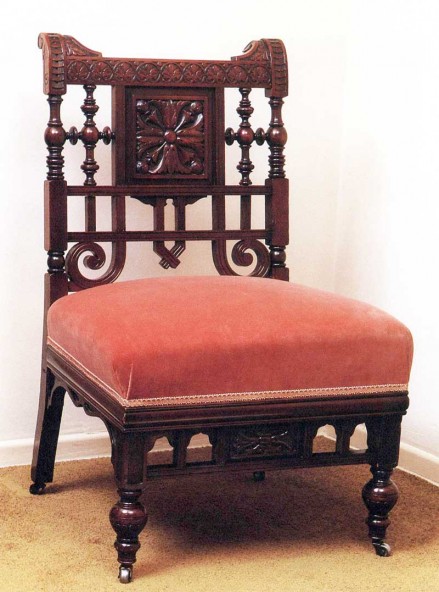
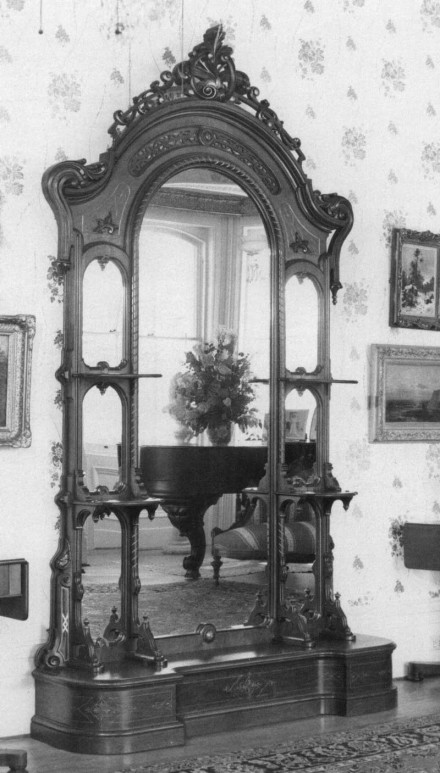
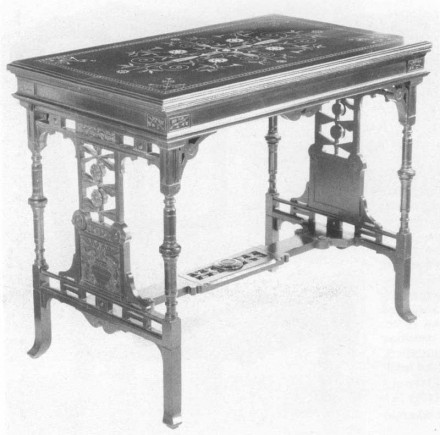
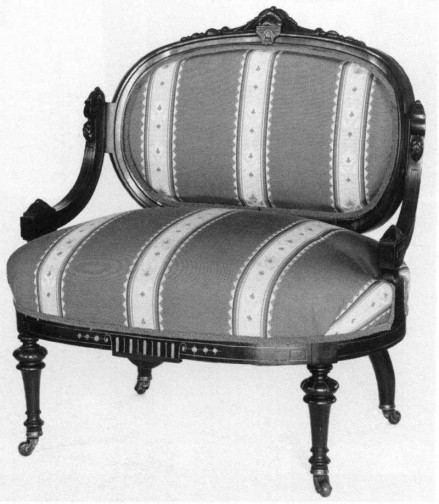
Ruth's book is an exhaustive study of the various incarnations of this company over it's 35 year career. With many more photos than those shown below, the book demonstrates how this manufacturer made furniture through all the styles changes of the Victorian era, including Gothic Revival, Rococo Revival, Eastlake, Renaissance Revival and Modern Gothic.
One especially notable piece made by them was for the Queen's Hotel in Toronto: "
The Great Sideboard". If you follow the link you will see a sideboard of gargantuan proportions. It won Jacques & Hay the Place of honor for furniture at the Philadelphia Exposition in 1860.


11 comments