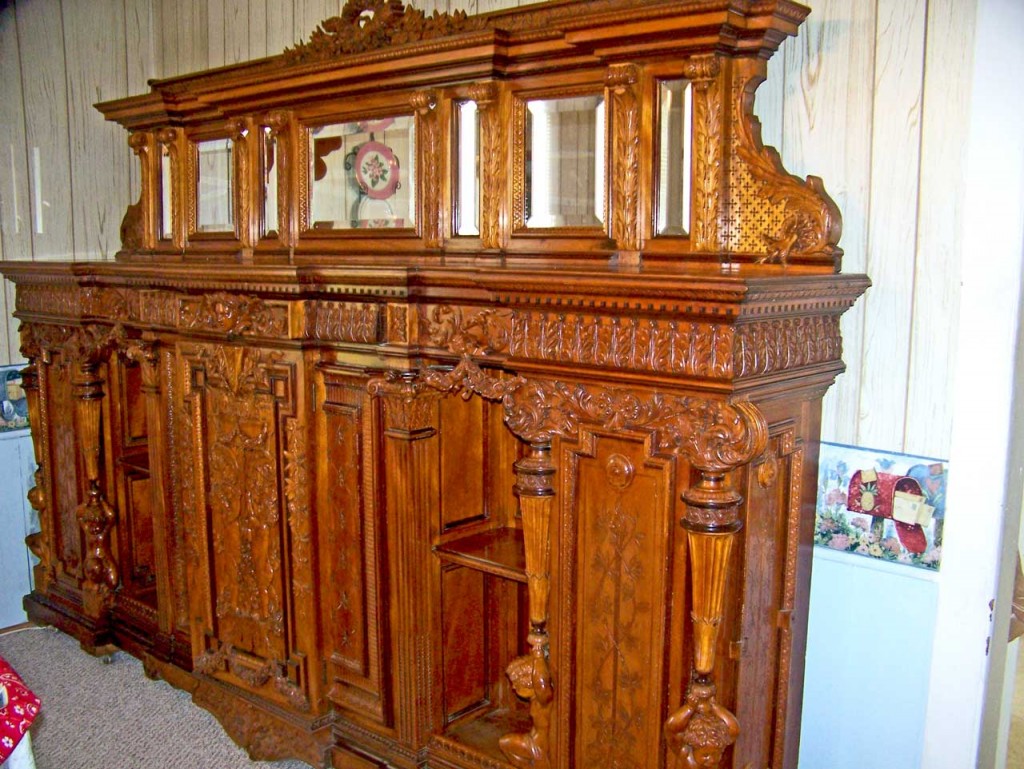
A recent blog visitor, Melody, shared some photos with me of her family's monumental sideboard. If anyone has any information on whether they could confirm the origin of Capri and the type of wood, she would be grateful. I thought that you would enjoy the story that she shared with me:
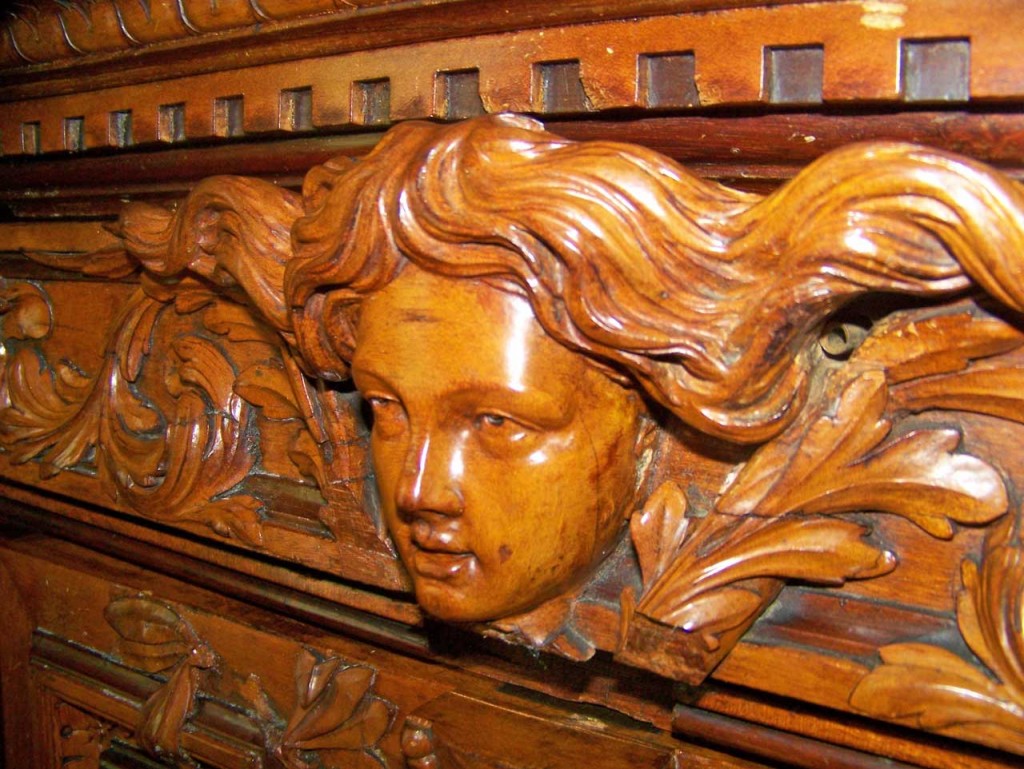
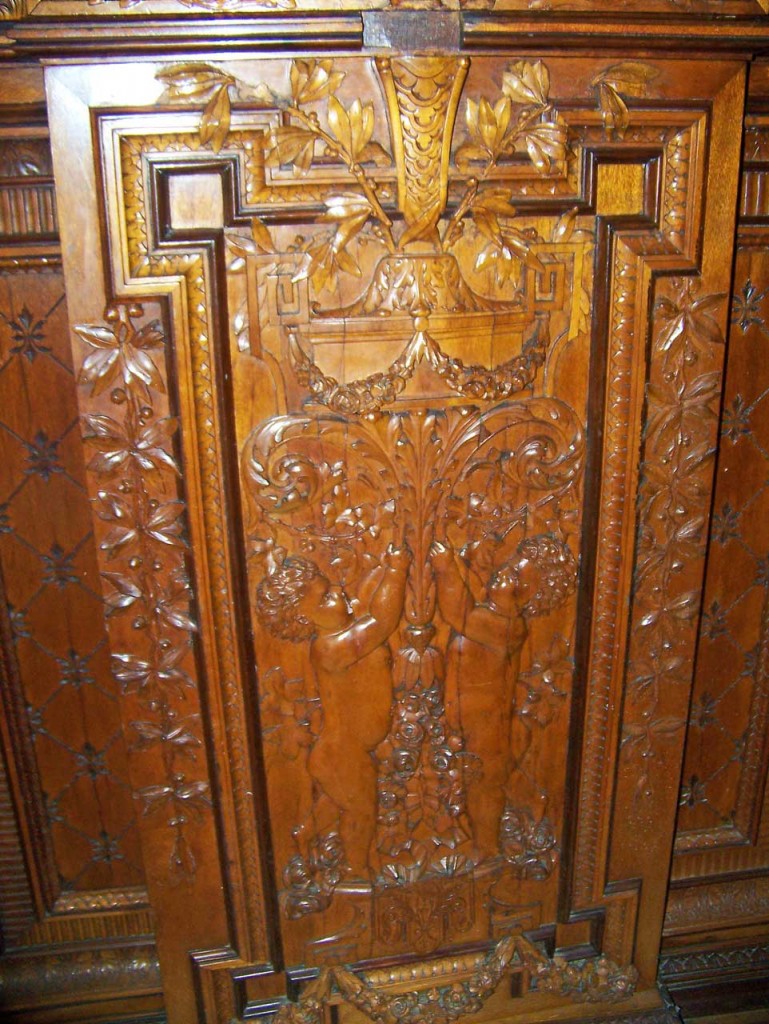
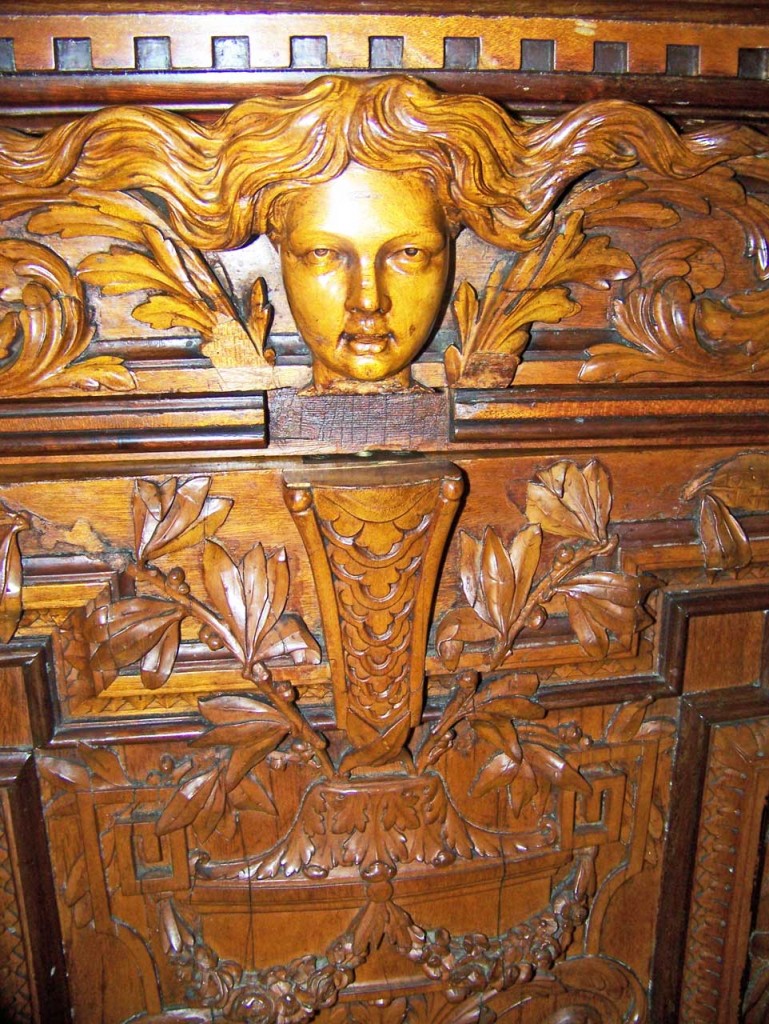
We have a bill of lading from 1897 where it landed in NYC. The background is intriguing: a wealthy coal baron from Charleston, WV and his wife went on a cruise in the Mediterranean. They stopped at Capri; saw the piece in a monastery or some other establishment, a church maybe, run by Monks who according to the story, had carved the piece. The husband had to have it, bought it and had it shipped to NYC; then to his home in Charleston. He caught his wife w/another man; killed the man; hired an attorney in Charleston/Nitro area to represent him; the trial was costly, so he pledged the credenza as payment for legal fees. My great uncle’s father was friends w/the attorney; when he was moving, my great uncle bought the piece for use in the hotel in Nitro, WV. When that hotel was to be torn down, my uncle offered the piece for sale; my grandmother bought it, and we’ve had it ever since. We think the wood is lemonwood w/handcarvings of cherubs. There are three secret compartments: one in the angel’s ear to open a drawer; two on either end. There may be mahogany on the piece as some of the wood has a distinct black cherry look. It’s in mint condition and weighs more than 900 pounds. The story behind it is that there were only five made
More photos follow (click to enlarge to full size).
 A recent blog visitor, Melody, shared some photos with me of her family's monumental sideboard. If anyone has any information on whether they could confirm the origin of Capri and the type of wood, she would be grateful. I thought that you would enjoy the story that she shared with me:


2 comments