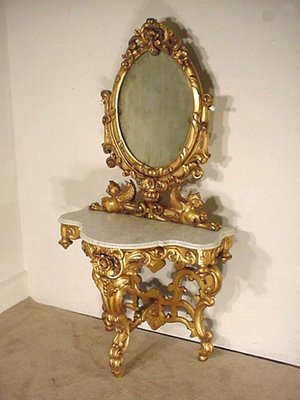
 I thought that I'd share a personal experience of an example of the problem with online antique descriptions. This scenario happens to involve a dealer, but I won't isolate dealers as the only individuals capable of misleading buyers. Ebay can be a better breeding ground for misleading information.
I happen to have sold this piece to someone and they placed it into their inventory after completely painting it gold. When I had it, it was completely ebonized, if you can call spray paint ebonization. Ideally, it would have been completely stripped and refinished, but I don't fault them for the change to gold as it would have been time-consuming to remove the black paint from every nook and cranny as it was. I think it looks much improved.
What I have a problem with is portraying the piece as always having this look. I won't quote the listing for fear of Googling, but suffice it to say that the description leads the prospective buyer to think that the gold finish has been there for a long time. There is a particular reference to the "wear" and "patina" on the finish being "exceptional", which is inappropriate for a fresh coat of paint. This is language that you use to describe a nice old finish after decades of wear. This is misleading the buyer to believe that the gold is something that has been in place for some time; maybe not misleading them to feel it is original - but misleading them to think it is old.
For me, I'd rather miss out on 10%-25% of upside on the sale so that I can feel confident that I have been completely forthright with the buyer in my descriptions. This is not an extreme example and I know this dealer to be forthright and honest. I just mention it for us all to remember to ask questions when on the buying side and to not spin it too much when on the selling side.
This is how it looked when I owned it months (possibly weeks) before the transformation:

3 comments